The questions never stop
- ?Which market should I trade?
- ?Should I use a 5, 10, 11, or 15-minute chart?
- ?What risk-to-reward structure makes sense?
- ?How many trades should I take today?
- ?When should I enter—and when should I be completely done?
You study, test, and show up—yet consistency can still feel out of reach. Automatic Pilot Method turns a long list of daily decisions into one predefined MNQ process for NinjaTrader 8.
No system can guarantee profits. Futures trading involves substantial risk of loss.
And trying to answer everything while the market is moving is where discipline often begins to break down.
A ready-to-install NinjaTrader 8 strategy built for the trader who wants one clear process—not another morning of rebuilding a plan from scratch.
Import the compiled strategy, activate your license, and review the setup with the included installation guidance.
You remain in control of your account and contract quantity. APM handles its programmed process during the defined window.
Leave NinjaTrader running on a stable computer or VPS while APM follows its predefined rules. Continue with your work, family time, or daily routine while keeping alerts active and remaining available to monitor your account when needed.
A strategy can have more losing trades than winning trades and still be profitable when its average winners are meaningfully larger than its average losses. These reports are provided by the strategy developer; review the full reports and disclosures before making any decision.
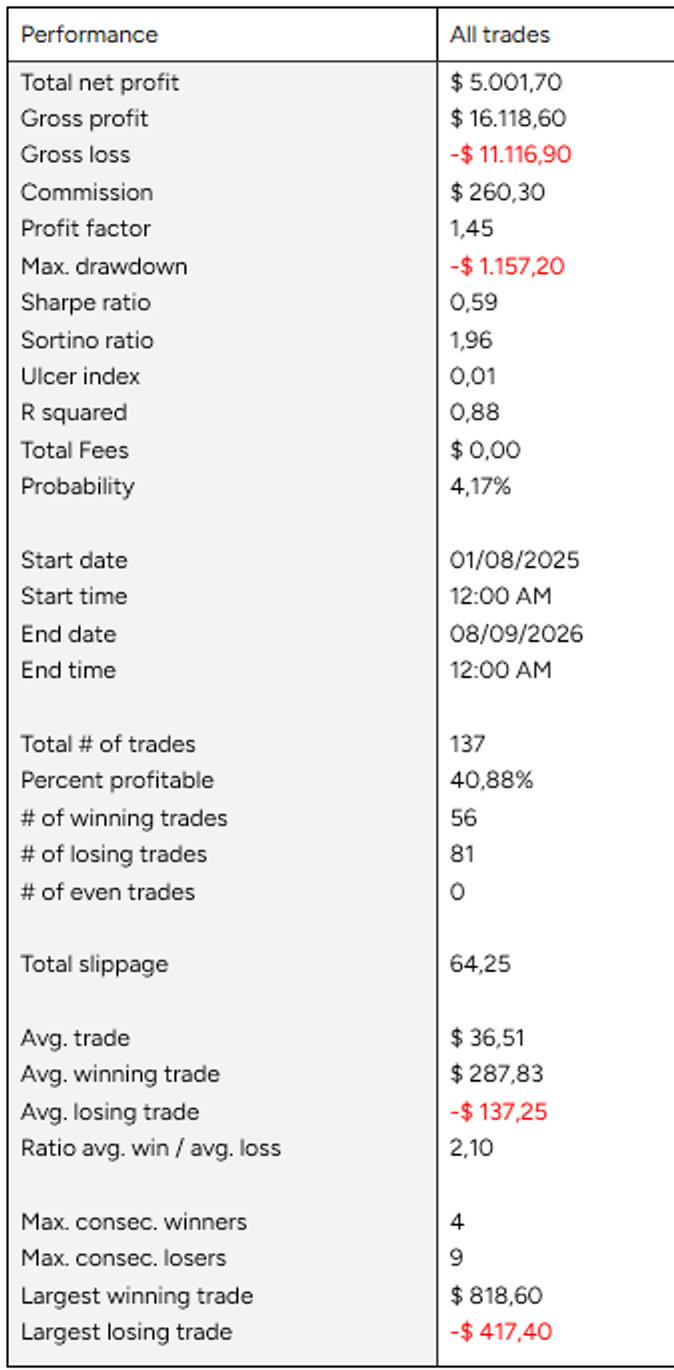
Reported net profit $5,001.70 · profit factor 1.45 · 137 trades. The report displays $260.30 commission and 64.25 total slippage.
Open full report ↗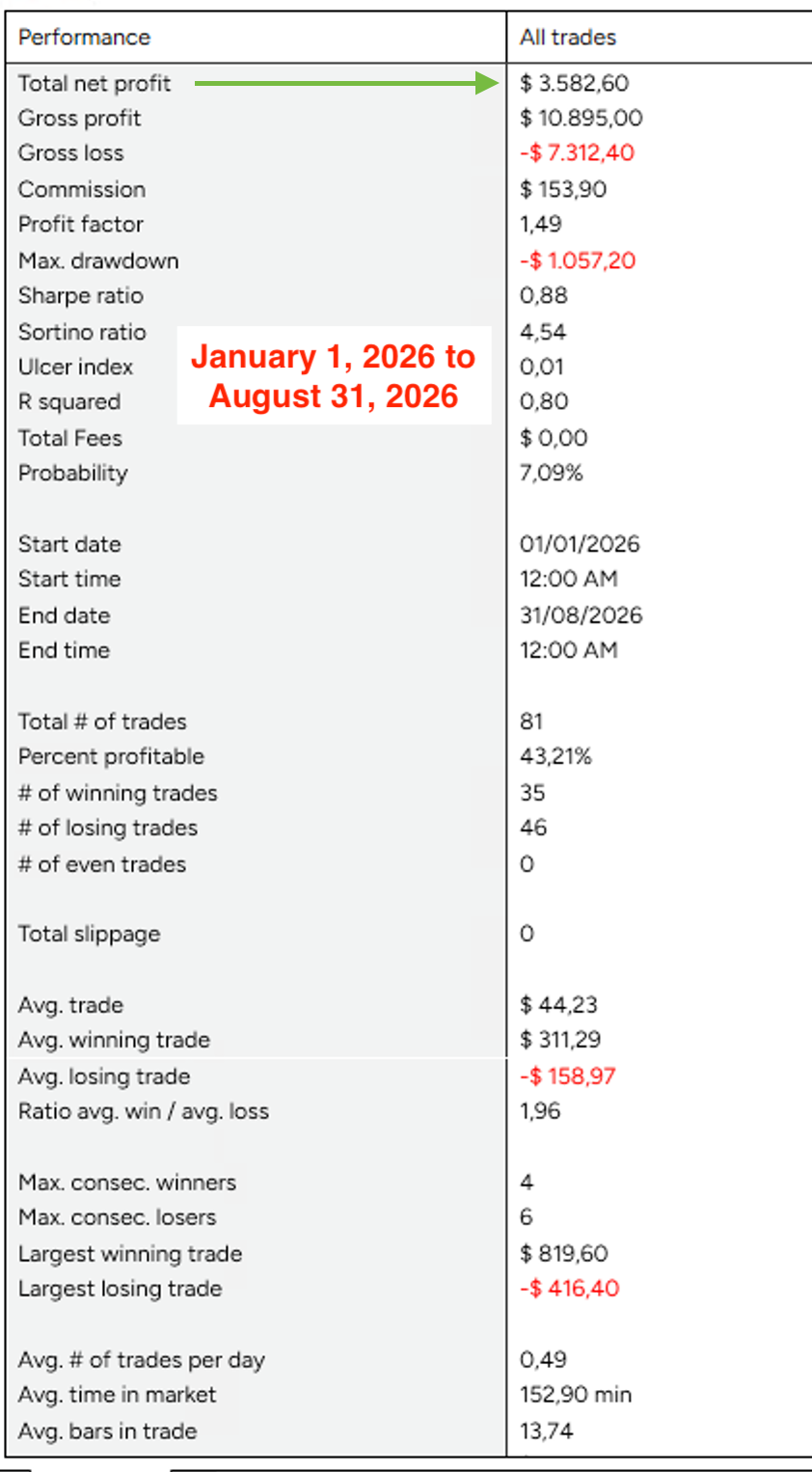
Reported net profit $3,582.60 · profit factor 1.49 · 81 trades. Full platform report available above.
Open full report ↗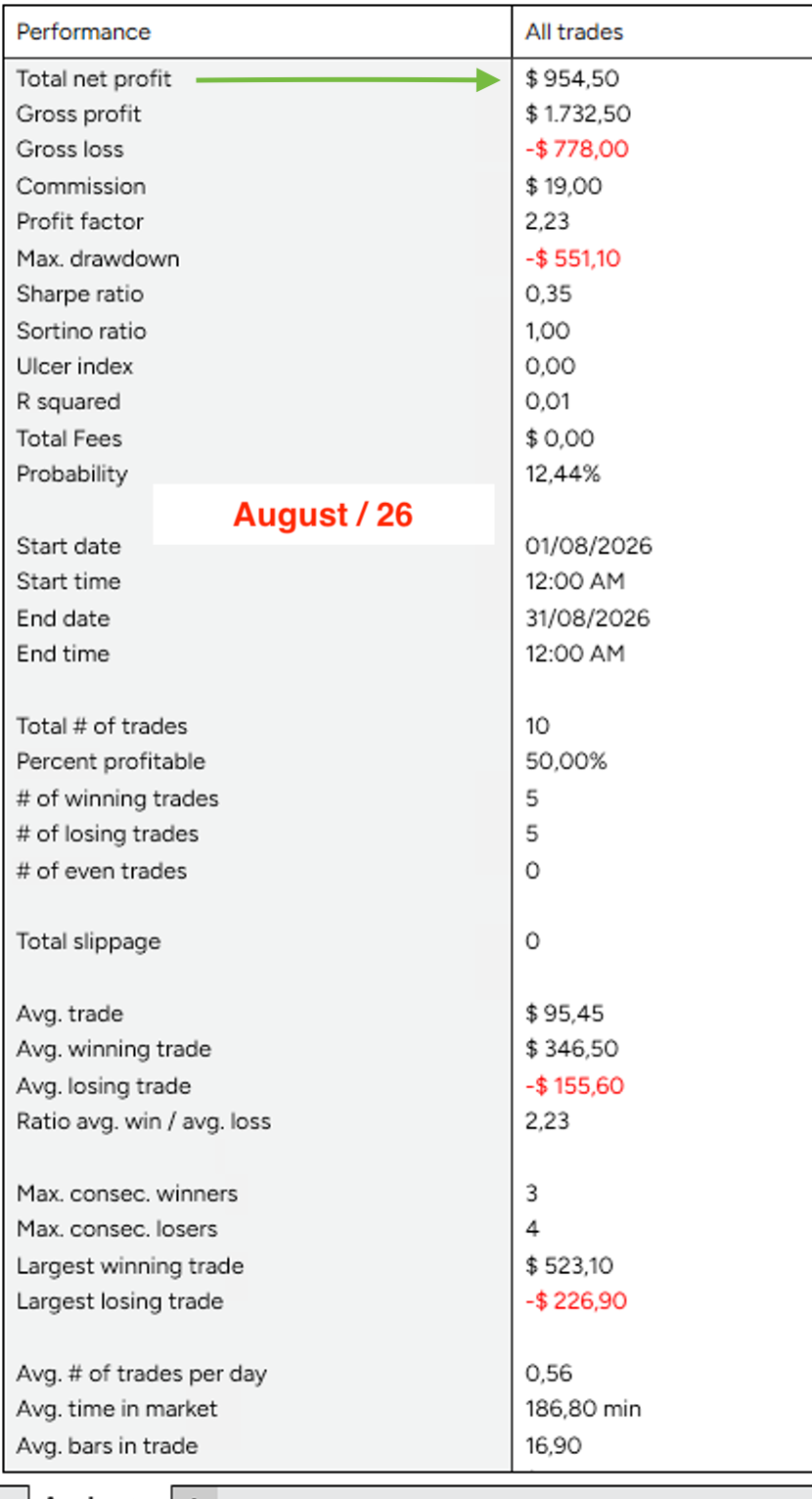
Reported net profit $954.50 · profit factor 2.23 · 10 trades. Full platform report available above.
Open full report ↗Results are reported from the NinjaTrader Performance reports supplied by the developer. Trading results can vary; figures do not guarantee future performance. See the risk and performance disclosures below.
The strategy is designed for traders who cannot or do not want to watch charts all morning. When your computer or VPS is configured and NinjaTrader is running, the system follows its programmed opening-session rules while you focus on your work and your day.
Get full access with a flexible monthly license. Prefer to pay once? Lifetime access is also available.
Monthly license
Full access with a single-user license billed monthly.
Start with a lower upfront payment and keep access while your subscription is active.
Lifetime license
Prefer a one-time purchase? Get a single-user lifetime license.
The monthly option renews automatically until canceled. Lifetime installment availability, terms, and any interest are determined by the payment provider and buyer eligibility at checkout. Refund, cancellation, support, device, and account-transfer rules are governed by the policies linked below.
No. The strategy is delivered for NinjaTrader 8 with setup instructions. You should still be comfortable configuring your own platform and reviewing the strategy settings before enabling it.
There is no single amount that is appropriate for every trader. Your account size should reflect your personal risk tolerance, broker margin requirements, and ability to withstand a drawdown. For context, the largest historical drawdown observed in the results presented was approximately $1,157 while trading one MNQ contract. Future drawdowns may be larger. Aggressive scenario: $3,000. This provides approximately 2.5 times the historical maximum drawdown. It may be suitable only for traders who understand that the account can experience significant percentage swings and who are prepared to add funds or stop trading if the drawdown exceeds historical levels. Conservative scenario: $5,000 to $6,000. This provides approximately four to five times the historical maximum drawdown, creating more room for losing streaks, slippage, commissions, margin changes, and market conditions that differ from the tested period. These illustrations assume one MNQ contract. Increasing the number of contracts materially increases risk and required capital. The broker’s minimum deposit or intraday margin is not the same as an appropriate account size. Past and simulated results do not guarantee future performance. Futures are leveraged and involve substantial risk of loss, including the possibility of losing more than the amount deposited. Use only risk capital and confirm all margin requirements directly with your broker.
No. It is designed for one predefined MNQ opportunity per day during its configured opening-session window. It is not an all-day, high-frequency system.
Only if your firm, account type, and platform connection allow automated strategies. Rules differ by firm and can change; you are responsible for confirming compliance before use.
For unattended use, a stable computer or VPS running NinjaTrader is generally needed. Protective-order behavior depends on your specific broker, connection, and NinjaTrader configuration; test your setup first.
No. This is software that applies a fixed rule set. It does not provide individualized investment advice, manage your account, or guarantee any trading outcome.
The strategy does not use a fixed stop-loss of a specific number of points. Instead, its risk management adapts to current market movement. For each signal, APM places the stop based on the structure of the reversal candle and sets a profit target equal to 3.2 times the stop distance. This maintains a consistent risk-to-reward ratio of approximately 1:3.2. The number of points varies according to market volatility: during quieter sessions, the stop and target are smaller; during more volatile sessions, they are larger.
No. APM is limited to a maximum of one trade per day, but it will only place a trade when all predefined setup conditions are met. If the market does not present a valid opportunity within the strategy’s trading window, APM will remain inactive for that session. The system is designed to follow its rules—not to force a trade simply because the market is open.